
Analytics
12 min readAnalytics: War, Gas Fragility, and the East Med Illusion
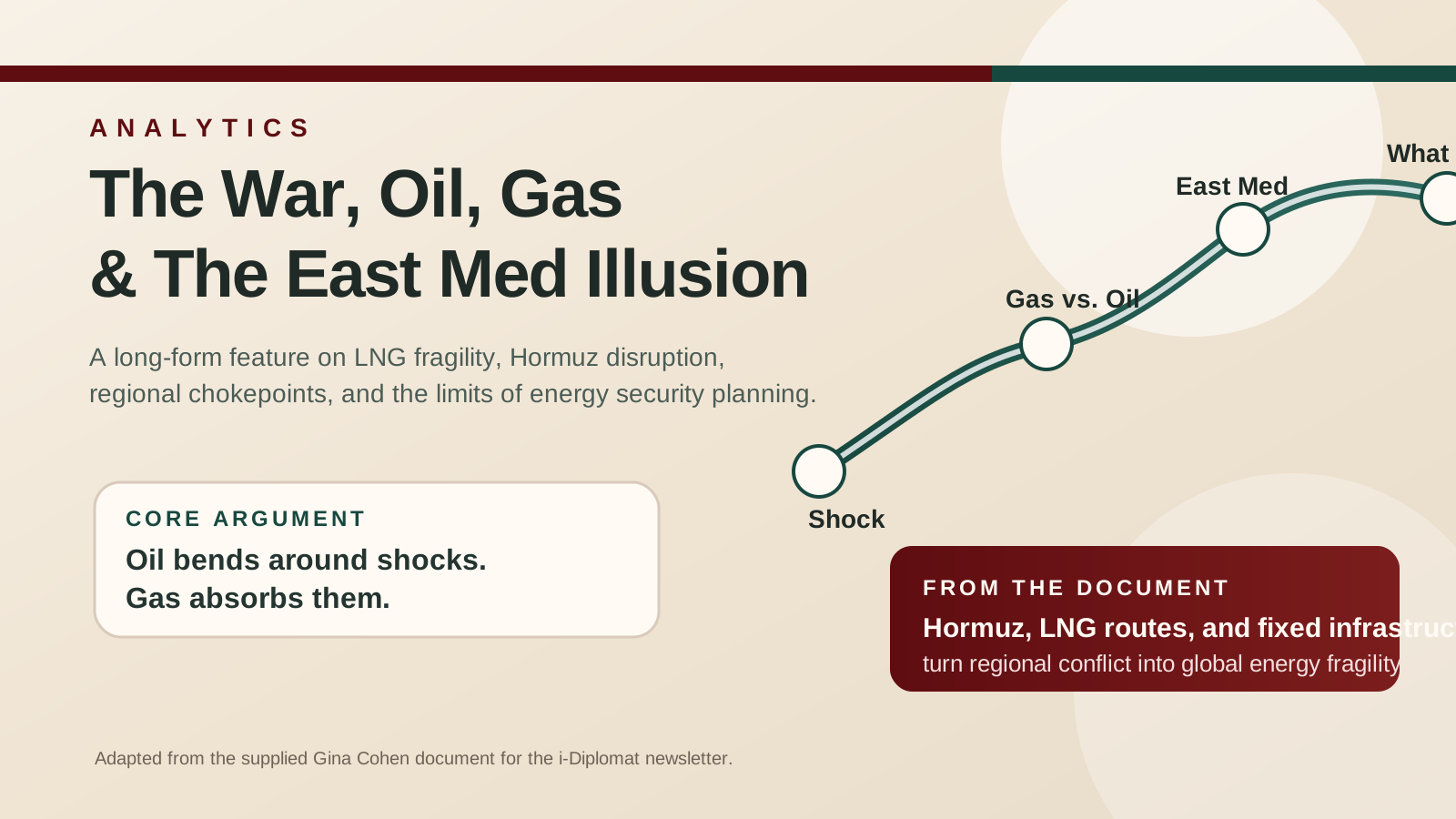
The core argument is that oil can bend around shocks, while gas remains constrained by fixed infrastructure, limited storage, and much slower recovery.
Gina Cohen's paper argues that the latest Middle East war is not only a war story or a price story. It is a stress test of the global energy system and a warning against treating oil and gas as if they share the same flexibility.
Her central point is that oil can often reroute around shocks through alternative shipping patterns, pipelines, and storage strategies, whereas gas, especially LNG, is structurally less forgiving. Once gas flows are interrupted, the system has fewer shock absorbers, fewer vessels, tighter storage, more fixed infrastructure, and much slower recovery timelines.
Contents
- The shock
- Some Facts & Figures
- What the US and OECD are trying to do
- Gas vs. Oil
- Why gas is more fragile than oil
- Israel
- Egypt
- Cyprus
- Turkey and the regional gas network
- What next: short term and long term
- Different countries
- Suppliers that are and/or can benefit
- Conclusion

The Shock
- Nobody seriously anticipated closure of Hormuz despite scenarios on paper, and once escalation started nobody knew when it would end or how.
- Iran managed to play its only two cards: attack its neighbors and threaten global energy.
- Around one-fifth of oil and one-fifth of LNG pass via Hormuz.
- During the war, hardly any ships passed via Hormuz except those from Iran, and no LNG was passing.
- Brent rose from $72 on February 27 to $119 by March 9, while natural-gas prices more than doubled.
Timing
Before the war, markets assumed the world was awash with oil and LNG and that prices would trend lower. But gas had not yet reached the extra-capacity wave expected by the end of 2026 from Qatar and the United States. EU gas storage was at a multi-year low of 28.4% of capacity as of March 23, and global gas demand had been growing faster than oil over the past decade.
Demand for oil rose by 0.8% in 2024 compared to 2.7% for natural gas. LNG demand alone is expected to rise from 422 million tons in 2025 to roughly 650-710 million tons by 2040. In Cohen's framing, gas walked into the shock already stretched. The one redeeming factor was timing: the war began during shoulder season, when oil and gas demand was below summer and winter peaks.
General
- The whole world is involved; this is no longer a Russia-only supply crisis.
- When Russia cut supplies to Europe after February 22, 2022, the molecules remained and could go elsewhere; now the molecules themselves are off the market.
- More fuels are involved than during the Russian crisis.
- The disruption affects the full chain: production, shipping, storage, and logistics.
- The world no longer wants Russian energy, but it still wants energy from Qatar, the US, and the broader Middle East.
Some Facts & Figures
- Saudi Arabia ships roughly 7 million barrels per day of oil, with about 6 million normally flowing through the Persian Gulf and the Strait of Hormuz.
- Saudi Arabia can ship 5-7 million barrels per day via the Red Sea, though some capacity is needed for local refineries.
- Immediate loss of 83 million tons of Qatar and UAE LNG now and for five years, plus 32 mt/year of delayed new Qatari LNG supply.
- Iraq can export only small volumes via Turkey, while Oman can export via the Gulf of Oman.
- The 32 IEA member countries hold a combined 1.2 billion barrels of emergency oil storage; the United States currently holds around 415 million barrels in storage.
- Already the cumulative loss of oil exports from the region is approaching and will soon exceed the scale of previous IEA emergency stockpile releases.
- Oil once hit $148 in 2008; Cohen estimates it could cost $25 billion to repair damage to Gulf energy infrastructure.
What the US and OECD are trying to do
- Release oil from reserves, though this takes weeks and can only be released at limited daily rates.
- Export via alternative routes, though only Saudi Arabia and the UAE have meaningful alternatives and even those are limited.
- Remove sanctions on Russian oil floating at sea, though this had little impact.
- Use the Iraq-Turkey pipeline, which sends small volumes directly to the Mediterranean.
- Release oil from Venezuela.
- "Take the stairs" through demand-side coping measures, including fuel-tax reduction such as in Italy.
- Consider restricting US oil and gas exports.
- Cohen's conclusion: none of these measures actually bring back lost supply.
Why gas is more fragile than oil
- Seasonality adds another layer of fragility: gas demand swings sharply in winter in Europe and summer in the Middle East, while oil demand is flatter.
- Oil can cycle inventory throughout the year; gas storage depends heavily on seasonal timing, making it harder to hedge and stabilize.
- Oil has optionality, gas has constraints. Crude can shift across pipelines, tankers, and storage with relative ease.
- Gas depends on liquefaction plants, LNG carriers, regasification terminals, and fixed pipeline links, with limited room to improvise when flows are hit.
- There is no comparable strategic reserve or quick supply response in gas markets.
- One cannot move gas from pipeline to ship and back to pipeline with the flexibility oil enjoys.
- It can take a decade to build new LNG infrastructure.
- LNG export terminals are capital-intensive, technically complex, and slow to repair or restart once damaged or shut.
- The global oil tanker fleet numbers around 12,000 vessels, compared with roughly 700-800 LNG carriers.
- Spot gas markets can swing from $3 in the US to $20 in Europe and Asia, forcing import-dependent buyers to compete for flexible cargoes.
- As demand rises, sellers face strong incentives to prioritize higher-margin spot opportunities over lower-priced long-term contracts.
- Oil can be stored almost anywhere, including on ships at sea, while gas storage requires specialized infrastructure and much higher cost.
- Gulf oil can still find a way out; gas has no comparable escape valve when LNG volumes are disrupted.
Israel
- Israel has enough gas for roughly 25 years with exports or 50 years without them.
- Exports still matter if done efficiently, but Israel remains heavily dependent on oil, especially in wartime.
- About 71% of the country's electricity generation is from gas, with domestic prices around $5.5/MMBtu, or roughly 25% of current global prices.
- Two of Israel's three gas platforms shut during the war, increasing reliance on diesel and jet fuel for military use.
- Israel signed a major gas export contract with Egypt for 130.9 bcm, but Cohen argues Israel failed to secure strong enough financial or geopolitical returns.
- Italian ENI announced in March that it was getting out of Israel, and the fifth licensing round is on hold.
Egypt
- Egypt is consuming more and more gas while producing less and less: 42 bcm produced versus 63 bcm consumed in 2025.
- Its system used to rely on domestic supply plus LNG imports, Israeli pipeline gas, flexible global spot markets, and planned Cypriot imports.
- With the Hormuz closure and subsequent attacks, all of those pillars came under simultaneous pressure.
- Egypt leased four FSRUs plus one positioned in Jordan, but supply security still failed because Qatari LNG exports were disrupted and Israeli imports stopped for 32 days.
- Egypt now has to compete globally, including against Turkey, for LNG cargoes.
- Progress on Cypriot gas imports remains slow, with no final investment decision yet on Cronos or Aphrodite.
- Cohen argues that Egypt's energy security is hostage to multiple geopolitical theaters it does not control.
Cyprus
- Cyprus hosts major IOCs with enough clout to offset Turkish threats, but also enough leverage to resist Cypriot policy preferences.
- Commercial disagreements remain around pricing, transfer points, cost overruns, and how much gas should stay in Egypt versus be exported as LNG.
- Cohen argues Cyprus risks ending up with little gas for its own use and too little control over its own strategic future.
- Until the current war, Cyprus also faced limited netback from international sales, though high global prices could have created upside if production had already been flowing.
- Her broader point is that Cyprus has enough reserves to take more control of its destiny instead of handing all leverage to companies and Egypt.
Turkey and the regional gas network
- Turkey is supplying gas to Syria through an Azerbaijan swap arrangement and has signed an exploration agreement with Chevron.
- It still wants to become a gas hub, but has not succeeded in doing so with Russian gas or by winning Europe's approval for more Russian molecules under other labels.
- Several Turkish contracts expire at year-end, making 2025-2026 especially difficult.
- Gas imports from Iran under a contract for up to 9.6 bcm/year were suspended amid the conflict, while LNG disruption through Hormuz pushed up Turkish spot import costs sharply.
- Ankara has had to raise gas and power prices by 25%, undermining large retail subsidies.
- The regional gas map is not a unified network but a set of fragmented bilateral corridors such as Dolphin, Iranian exports into Iraq and Turkey, and the Arab Gas Pipeline.
What next: short term
- Cohen argues the opening of Hormuz after the shock changes less than people think; trust in the old system is already damaged.
- Going forward, regardless of the eventual outcome, Hormuz will no longer be treated as fully reliable.
- Qatar has lost part of its aura as an unquestioned pillar of LNG security.
- LNG as Europe's substitute for Russian pipeline gas will no longer be trusted to the same extent as before.
What next: long term
- The system will not go back to what it was before; once trust breaks, it does not fully recover.
- Alternative oil pipelines exist and can be expanded, but they can also be hit and remain more complex than maritime trade.
- Gas alternatives are even harder because pipelines have physical limits and LNG infrastructure is slow and expensive to build.
- Insurance will remain high, fields cannot reopen quickly, and LNG facilities are extremely difficult to restart at speed.
- Supply-chain bottlenecks for turbines and other critical equipment remain severe, partly because of AI-era demand.
- New logistics routes such as IMEC may gain attention, while old proposals such as the Qatar-Turkiye Gas Pipeline may return to the agenda.
- The world may become more dependent on US oil and gas, but Cohen questions whether that is truly the outcome many countries want.
- Some cost-sensitive markets will rethink how much gas they want in their energy mix, yet diversification away from gas will still take decades.
Different countries
- The US is relatively insulated because higher prices hurt consumers but also transfer income to domestic producers.
- China may prove more resilient than Europe or South Asia because LNG has become more supplemental within its energy mix.
- Japan, South Korea, and Taiwan are better placed than more price-sensitive South Asian buyers to absorb shocks.
- Most Asian buyers have much less storage capacity than Europe, reducing their cushion against supply disruption.
- Europe was already in a precarious position after a colder-than-usual winter depleted storage before the latest crisis.
Suppliers that are and/or can benefit
- Exporters with limited spare capacity still benefit from higher global prices even if they cannot lift output dramatically in the short term.
- The United States is one of the clearest beneficiaries, both from immediate price upside and from future buyer reluctance to over-rely on Qatari supply.
- Outside the US, the most credible medium-term alternatives include Canada, Argentina, Mozambique, Mauritania, Senegal, and Australia.
Conclusion
- Nobody anticipated the scale of this shock.
- This is a story about the vulnerability of the entire energy chain, not only about war or prices.
- Oil and gas should not be treated the same way in this crisis: oil has ways to bend, while gas is far more rigid.
- The country cases of Israel, Egypt, Cyprus, and Turkey all point to the same problem in different forms: exposure, dependence, and lack of control.
- The unresolved question is not only when the war ends, but what in the pre-war energy system can still be trusted afterwards.
Attribution
This feature is a structured newsletter adaptation of the supplied document, "The war, oil, gas and the illusion of energy security and the East Med," by Gina Cohen, a natural gas expert based in Israel.
More Posts
Editor's Note
4 min readPalestinian Demography Beyond the Headlines
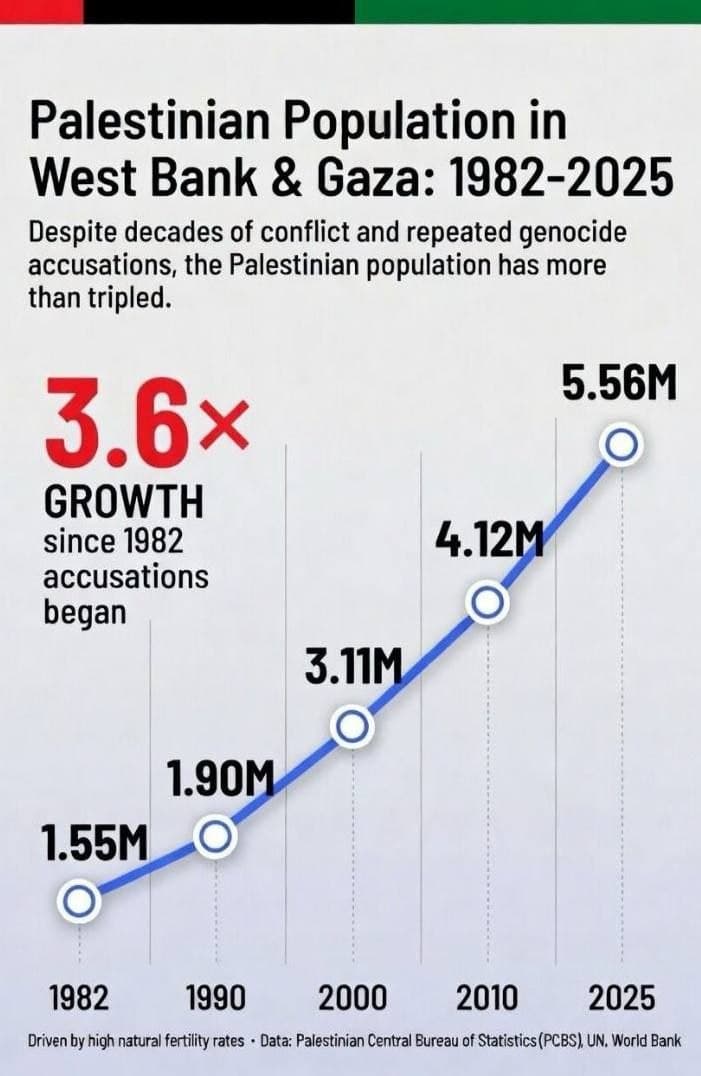
A verified look at long-run population growth in the West Bank and Gaza, and why demographic continuity should matter more than slogan-driven commentary.

Editor's Note
5 min readA Name in Memory and on the Map
A look at how Israeli street names preserve memory, politics, plants, cities, and national rituals across the map.

Video Brief
3 min readThe i-Diplomat Brief: Medical Access for Diplomatic Families
A short service brief built around the i-Diplomat video, showing how diplomats and their families can reach healthcare support quickly in Israel.

Law Corner
7 min readA Historic Step to Bring Justice to Victims of Terror
The Federal Court of Appeals in New York ruled that U.S. courts can hear lawsuits against the Palestinian Authority and the PLO, together with retroactive legislation for past attacks.

Academic News
6 min readAcademic News: Did Paul Found Christianity?
Historian Yigal Bin-Nun revisits the old question of Paul and Christianity by arguing that the religion emerged gradually through conflict, reinterpretation, and later canon-building.
Editorial Note
This issue is published as a curated editorial archive inside the public i-Diplomat site.